


Recently, the Institute of Energy, Hefei Comprehensive National Science Center (hereinafter “the Institute”) and CSSC No. 703 Research Institute signed a strategic cooperation framework agreement in Harbin. Oriented toward national and industrial development needs, the two parties will jointly develop advanced clean energy power equipment. This cooperation aims to integrate scientific and technological innovation with industrial innovation and represents a concrete measure to implement the national strategy for full green, low-carbon, and circular development.
CSSC No. 703 Research Institute is a large-scale ship power research institute under China Shipbuilding Industry Corporation. Since its establishment, it has successfully developed various types of marine boilers, steam turbines, gas turbine power units, gear transmission devices, and supporting automatic control systems. The power systems for China’s large naval surface and underwater vessels have all been developed by No. 703 Research Institute, which has won more than 300 scientific and technological progress awards, including 24 national-level awards.
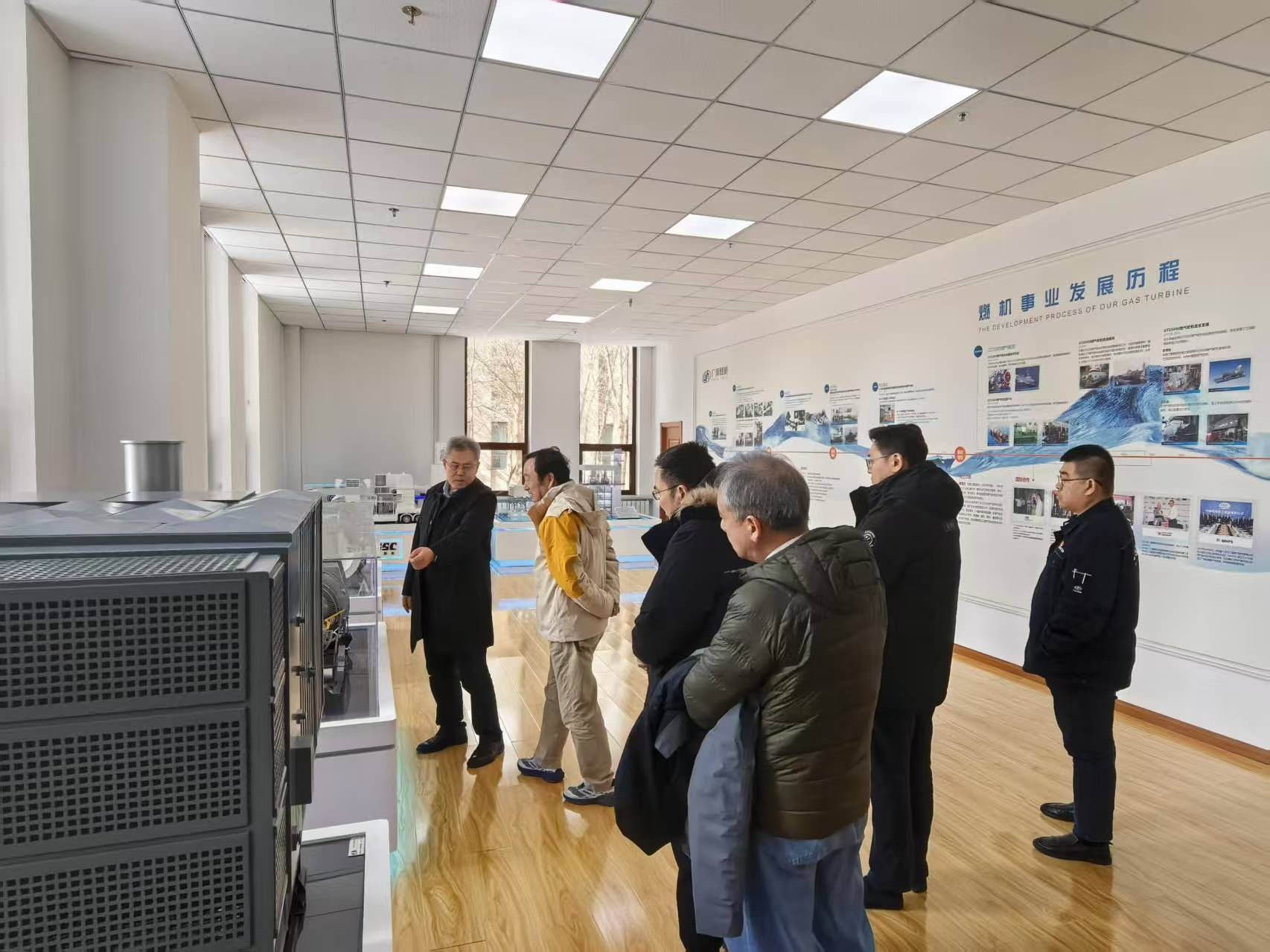
On the same day, Academician Li Jiangang of the Chinese Academy of Engineering, accompanied by relevant leaders of the Institute, visited the Digital Center, Remote Fault Diagnosis Center, Forming and Welding Workshop, and Final Assembly Workshop of the gas turbine division at CSSC No. 703 Research Institute. He listened on site as Director Lin Feng introduced the specific applications of technologies such as digital processing, full-lifecycle integrated support, and adaptive TIG welding in gas turbine development and maintenance. He highly praised the outstanding achievements of No. 703 Research Institute in the gas turbine industry.
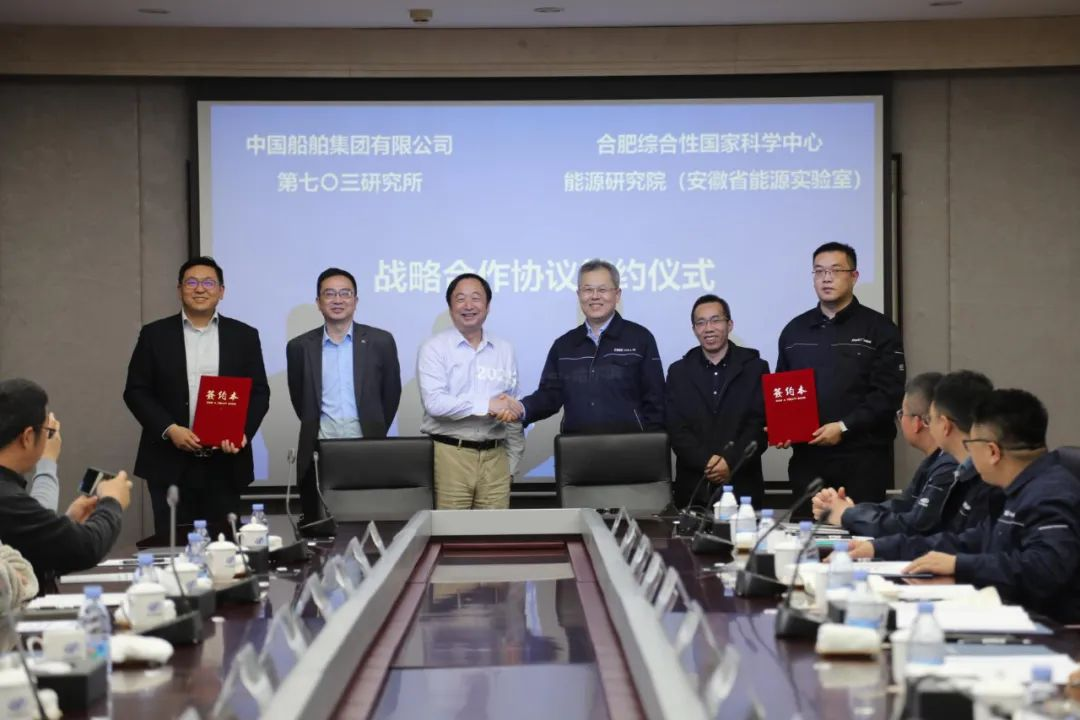
At the signing ceremony, Academician Li Jiangang and Director Lin Feng delivered speeches respectively. Both sides stated that they will leverage their respective strengths, with the goal of enhancing innovation capacity in clean energy power and achieving industrial transformation and upgrading. They will carry out all-round cooperation in basic research, key technology breakthroughs, transformation of scientific and technological achievements, innovation platform development, and talent cultivation. They will actively promote the co-construction and sharing of resources and outcomes, jointly conduct applied basic research and key technology tackling on new principles, new technologies, new methods, and new processes, and advance the high-quality development of China’s clean energy power sector.
After the signing ceremony, the two parties held in-depth discussions on the future development direction and joint R&D plans for key core technologies such as the design and testing of hydrogen-ammonia fueled gas turbines. They agreed to jointly establish the “Advanced Clean Energy Power Joint R&D Center”, form a joint research team, and carry out key technology tackling using a “wall-chart operation” approach, striving to achieve a breakthrough — from zero to one — in China’s hydrogen-ammonia fueled gas turbine power generation system within two years.
The signing of this strategic cooperation agreement marks an important milestone in establishing a long-term and stable partnership between the two institutions and signifies that their cooperation has entered a substantive stage. Taking this signing as an opportunity, both parties will further integrate resources, optimize cooperation mechanisms, and conduct in-depth research and practical exploration on cutting-edge technologies in advanced clean energy power. They will contribute to the steady advancement of China’s carbon peaking and carbon neutrality goals, the comprehensive construction of a Beautiful China, and the full green transformation of the economy and society.