


Recently, the Institute of Energy, Hefei Comprehensive National Science Center, in collaboration with the Institute of Plasma Physics, Hefei Institutes of Physical Science, Chinese Academy of Sciences, has made important progress in central fueling physics experiments on medium-to-large tokamaks. The research results were published in the authoritative nuclear fusion journal *Nuclear Fusion* under the title **“Inaugural Central Fueling Experiment with Compact Torus in EAST”**. The first author is Associate Researcher Ye Yang from the Fusion Industry Application Research Center, and the corresponding authors are Researcher Kong Defeng and Researcher Zhang Shoubiao.
The paper reports for the first time the central fueling physics experiment conducted using a compact torus (CT) fueling system on the EAST tokamak device. The compact torus fueling system is a high-power pulsed discharge device that generates an instantaneous extremely strong Lorentz force through large-current coupling of induced magnetic fields, accelerating the magnetized plasma blob to an exit velocity of hundreds of kilometers per second. The CT device reported in this paper has reached a speed of 150 km/s. Relying on its extremely high kinetic energy density and overall quasi-neutral physical characteristics, compact torus plasma is capable of penetrating the high-temperature, high-pressure, and strong magnetic field environment inside a tokamak, making it a highly promising central fueling method for fusion devices.
In this paper, it is observed for the first time that compact torus plasma is injected into the internal region of EAST, with a direct injection depth of approximately 0.8 in normalized poloidal flux radius, corresponding to a penetrated magnetic field strength of 2.05 T. This represents the current international record for the strongest magnetic field penetrated by a compact torus system. Furthermore, after direct injection and during the subsequent fueling process, the compact torus plasma continues to penetrate toward the tokamak core until the entire particle deposition process is completed. In addition, reflectometer measurements show that the injection of compact torus plasma also contributes to density peaking in the EAST core, which is of great significance for improving confinement performance, optimizing bootstrap current, and breaking through the density limit in fusion devices.
The successful realization of central fueling using compact torus fueling technology on EAST represents the first international fueling physics experiment of this technology oriented toward medium-to-large tokamaks. This work holds great significance for the research and development of compact torus fueling technology. The research was supported by the National Key R&D Program of China (Research on Compact Plasma Torus Injection Fueling Technology for Future Magnetic Confinement Fusion Reactors, 2024YFE03130000) and the independent project of the Institute of Energy, Hefei Comprehensive National Science Center (Particle Control and Advanced Central Fueling Physics Design for CFEDR Tritium Self-Sufficiency, 24KZS303).
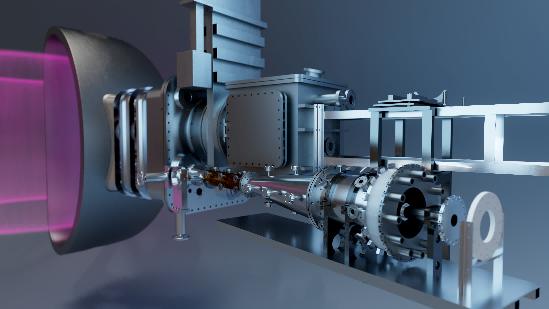
Figure 1 Installation engineering drawing of the compact torus fueling system on EAST
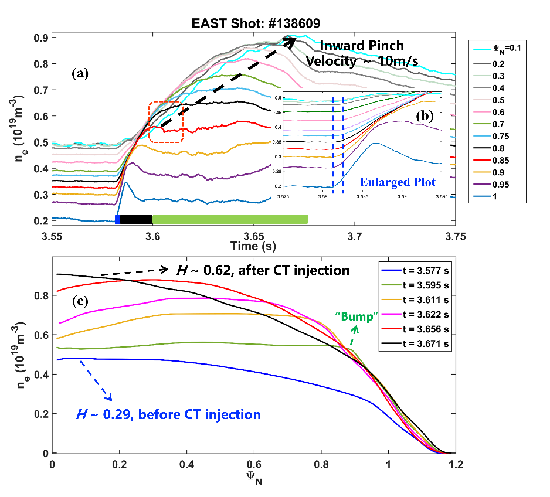
Figure 2 Injection process of compact torus plasma in EAST
Paper Link: https://iopscience.iop.org/article/10.1088/1741-4326/adf3c8